Estonia, Latvia and Lithuania
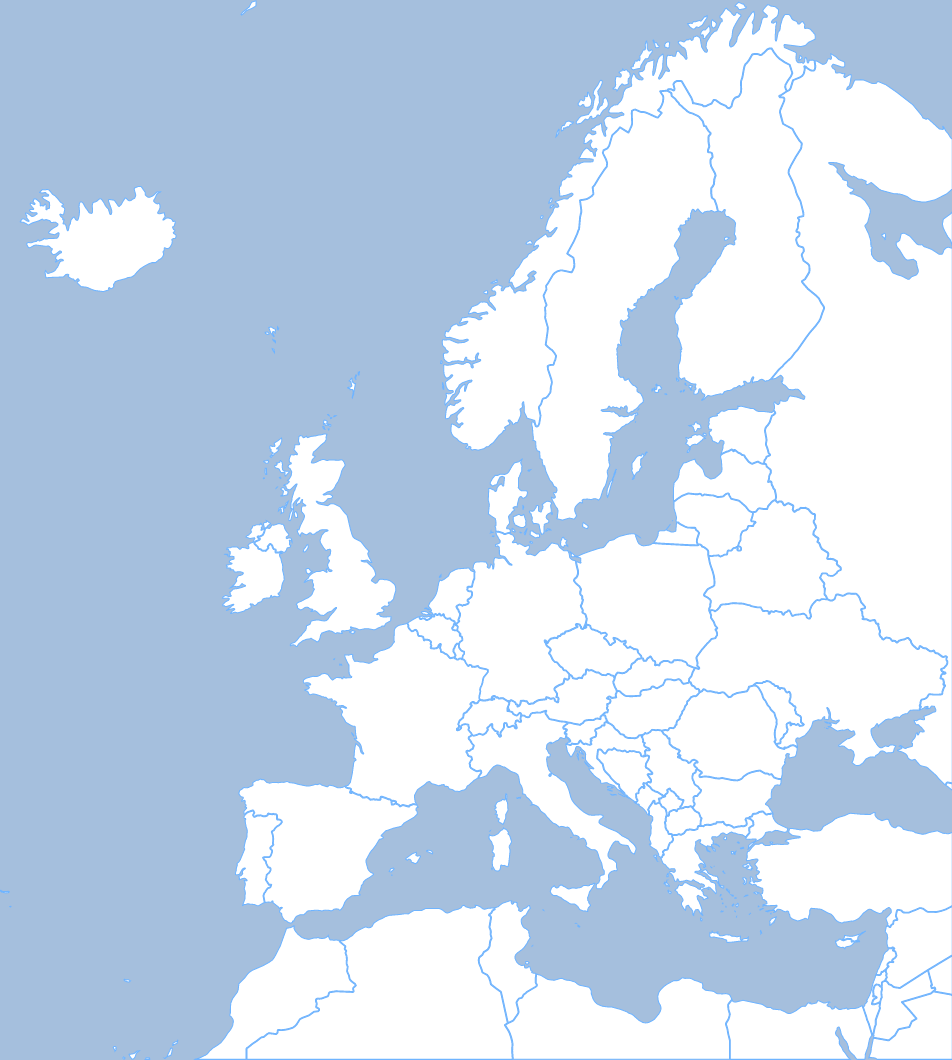
Map of the Baltic Countries showing Lampstands
(click on or hover over the map to view map labels)
The move of the Lord in the Baltic countries through the spreading of the ministry of the Lord’s recovery occurred mainly in the 1990s, after the fall of Communism. Of the three Baltic countries, Lithuania was predominantly Roman Catholic, and Latvia and Estonia were traditionally Lutheran; all Christians were persecuted under the rule of Communism. However, saints in these countries have sought for the deeper truths, and small groups, especially of young people, were raised up after the fall of Communism.
Even before the twentieth century, Livonia (constituted of both present-day Estonia and Latvia) experienced a spiritual revival through the prayer and labor of the Moravian Brethren in the nineteenth century. Missionaries were sent to Livonia, and the people were attracted by their sincerity, simple living, and faith. It was said that as a result of the revival, both prisons and bars were closed. The influence of this move of the Lord was also linked to the desire of self-determination of these countries.
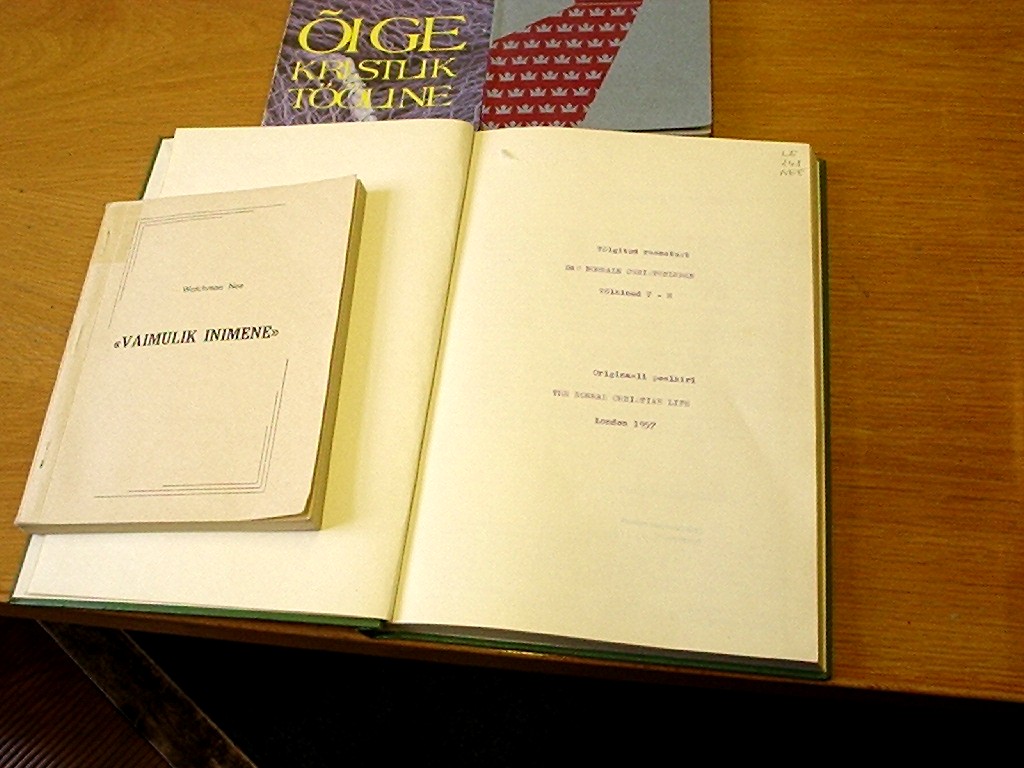
A few decades after independence (1917), all the Baltic countries became communist within the Soviet Union, and Christian work was opposed by the governments. However, ministry books were still being circulated underground by believers and groups. For example, when the brothers first went to Estonia, a local Lutheran librarian showed them four Watchman Nee titles that had been translated and published (hand-typed and printed versions) into Estonian in the mid-1950s. These books sustained many believers during Communist times.
All three Baltic countries declared independence from the Soviet Union in 1991. Their revolution is commonly known as the Singing Revolution because of the mass demonstrations in each country that included the singing of national songs and hymns that were forbidden by the Soviet-sponsored governments.

From 1993 to 1994 believers in these countries began to discover the ministry and come into contact with the saints in the Lord’s recovery. This was the result of the prayer of the Body regarding the Soviet Union.
A brother in a Baptist denomination in Latvia began to seek the truth more seriously after he was assigned to take care of believers who were being baptized. While studying Ephesians, he saw the expression God’s economy and asked his pastor what it meant. The pastor responded that it was a mystery and that they would not know until they got to heaven. Shortly after, he found on a friend’s bookshelf the book The Economy of God in Russian by Witness Lee. He was immediately struck that a man could write an entire book on a topic about which pastors could not say anything. The book was one of thousands smuggled into the Soviet Union given by the saints in the Lord’s recovery during Communist times. This brother ordered more books from Moscow, enjoyed the ministry to the uttermost, and began to encourage the young people around him to read the ministry.
These young people loved the Bible, and the ministry was, according to their testimony, like water reaching dry land. There was an explosion of life and experience. One brother testified that in 1989, when he was in his late teens, he spent one entire summer reading the Bible and accidentally touched his spirit. When these young people got in contact with the church life in Moscow and seven of them, including this brother, visited there in 1995, they saw many saints exercising their spirit. This brother testified that after seeing this, he called on the Lord loudly until he broke through and experienced great joy. They went back to Latvia and continued to meet with the Baptist denomination, but they were “ruined for Christianity” and left one by one. One brother went to the denomination, did not see the others there, and when he asked the Lord what happened, the Lord responded, “I’m not here.” The co-workers in Russia did not tell them how to begin the church life. Instead, the co-workers told them that there is a river of water of life flowing that is bright as crystal. If they kept drinking the river, they would become crystal clear regarding how to have the church life. Soon, almost twenty saints began meeting in a home and in 1996 the church in Riga, the capital of Latvia, took the ground. In 1999 they distributed around 20,000 Recovery Versions of the New Testament in Riga.
In 1994 a brother in Lithuania got hold of The Breaking of the Outer Man and the Release of the Spirit by Watchman Nee from a pastor in a denomination. The book had been brought from St. Petersburg, Russia. This brother was impressed by the truths in the book and began to seek out more books. He read The Spiritual Man by Watchman Nee and The Experience of Life by Witness Lee and passed on these books to other brothers in his denomination. Some of the believers received and enjoyed the ministry; others opposed it, but the brothers (around ten of them) continued to read the ministry books for two years. The brothers realized that the way they were meeting was off and began to bring up the matter of everyone speaking. In 1996 co-workers from St. Petersburg discovered them through a sister in another city in Lithuania and visited them. After about a month of meeting and fellowship with them, around ten saints left the denomination and began to meet as the church in Jonava, Lithuania.
Estonia was the first place in the Baltics that the ministry reached when a brother passed through in 1989 on the way to Russia with a supply of ministry books. The books were in Russian, and even though most Estonians do not speak Russian, the first meetings and bread-breaking meetings occurred in the cities of Kohtla Järve (1997) and in Narva (2003), cities in northeast Estonia, where Russian is widely spoken. Saints from several countries around the globe gathered in Tallinn, the capital city, to labor together in the gospel for nearly one month during January 2007.
The same year, separate from the special intensified gospel labor in January, the Lord began to gain a number of seeking young native Estonian-speaking students, three of whom eventually finished the Full-time Training in London and who continue to serve the Lord in His recovery. The Lord continued His gathering of seeking ones through the free literature from Rhema between 2009 and 2012, leading to a substantial meeting, including the bread-breaking meeting, being raised up in Tallinn beginning from 2010. In 2011 the first ministry book, The Overcoming Life, was printed in Estonian, and in 2016 four of the titles distributed by Rhema—The Economy of God, The Knowledge of Life, The All-inclusive Christ, and The Glorious Church—were translated and published in Estonian.
Today there are several churches in the Baltic countries, with much of the increase coming from the distribution of the ministry. There are also a good number of young people being raised up for the church life, and several young saints from the Baltics have attended the Full-time Training in London.