Belgium, the Netherlands, and Luxemburg
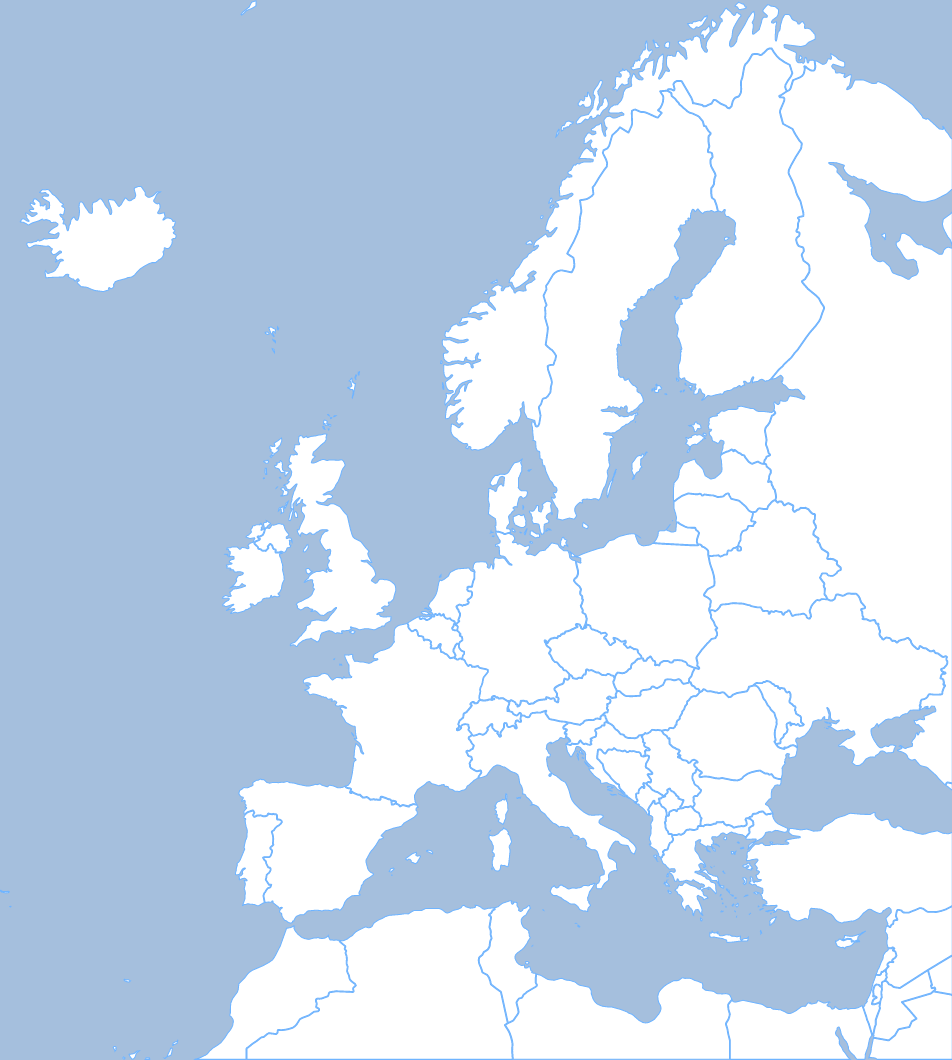
Map of the Benelux Countries showing Lampstands
(click on or hover over the map to view map labels)
The Netherlands and Belgium, though small countries, have been the context of religious and political events that have significantly affected the Lord’s move and world history.
The Low Countries played an important role in the Reformation. Desiderius Erasmus was a humanist Dutch professor, and his humanism meant that he supported the right to defend against the inappropriate power and authority of the Roman Catholic Church with proper logic and conscience. While being a visiting scholar at Queens’ College, Cambridge, Erasmus worked on and soon published the Greek New Testament, along with a Latin translation. Although Erasmus remained a Catholic, his work provided the basis for Martin Luther’s German translation of the Bible and was probably used by William Tyndale for the first English New Testament and by the translators of the Geneva Bible and the King James Bible.

The Netherlands itself was greatly affected by the Reformation in the sixteenth and seventeenth centuries. Lutheranism did not make great inroads, but the Anabaptists, who were against infant baptism, gained many adherents in the northwest provinces. One of the adherents was Menno Simons, who began the Mennonite movement.

Concerning these two groups Brother Nee shared the following in Messages Given During the Resumption of Watchman Nee’s Ministry (2 volume set):
There were the Mennonites, who were the first group of believers to realize the error of a hierarchy. Among them, they recovered the title of “brothers,” and they addressed each other as brothers. Some of them went to Russia to preach the gospel. In addition to them, the Baptists were also raised up. They saw the error of infant baptism, and they taught that a man must first be clear about the truth of baptism before he can be baptized. They were called the Anabaptists, and they were much persecuted at the beginning. These are recoveries of the outward things. (p. 53)
In the 1540s Calvinism began to make great gains, especially in Flanders, the Dutch-speaking area of present-day northern Belgium. The religious conflicts at that time played into political ones and discontent with Spanish Habsburg rule, and the Inquisition’s persecution of Protestants erupted into the Eighty Years’ War (1568–1648), resulting in the Dutch Republic gaining independence from Spain. In the midst of the Eighty Years’ War with Spain, there was a Twelve Years’ Truce, which saw the outbreak of conflict in the Netherlands between Calvinists and Arminianists, who differed on the matters of selection and security of salvation. Calvinism eventually became the dominant religion in the Netherlands.
However, the relative freedom of religion in the Low Countries in this period made it a refuge for many Protestant dissenters fleeing from persecution. Antwerp was one of the places that published William Tyndale’s English New Testament; Tyndale himself was captured and martyred by the Habsburg authorities in Vilvoorde, northeast of Brussels. The Puritans from England also emigrated to the Netherlands before going to New England in the early seventeenth century. The Puritans sought to “purify” the Church of England from Catholicism. They practiced separation from the state and believed that God’s word and revelation advances through the ages, and they were thus not bound by any single doctrine. However, they were strongly influenced by Reformed theology. A number of Puritans who had been in Leiden traveled on the Mayflower to America in 1620.
The southern part of the region remained mostly Catholic, and the Belgian Revolution in 1830, which had been partially motivated by religious reasons, led to the secession of the Catholic southern provinces and the formation of the Kingdom of Belgium. Belgium was the site of important battles in the great wars of the twentieth century. Following World War II, the early predecessor to the European Union was formed by the Treaty of Paris (1951) and signed by six European nations: Belgium, Luxembourg, the Netherlands, France, Italy, and West Germany. From that time, Brussels has increasingly functioned as the de facto “capital of Europe”. Today it hosts the official seats of the European Commission, European Council, and European Parliament, as well as numerous other European and international organizations.
Both the Netherlands and Belgium became increasingly secularized in the twentieth century, but the Lord began a significant recovery work in these countries in the 1990s. An announcement in The Collected Works of Watchman Nee, volume 32: The Open Door (2) stated that decades ago, “Brother Watchman Nee left England last month for Norway, Denmark, and Sweden. Then he will go to Belgium and France. Because of the need of the work there, he is not able to leave Europe now.” There was a church life in Belgium in the 1980s, but this testimony was lost, as were many other lampstands on the continent during that period of time. The church life in Belgium and the Netherlands began around the same time, from 1998 to 2000.
The church life in the Netherlands began with two families in The Hague in 1998. In the spring of 1999 all the subscribers of The Stream magazine in Dutch were invited to the first conference in Leiden. The saints began to gather with the seeking ones who had come to the conference and continued to contact more people by distributing ministry books and holding conferences. A meeting began in Almelo, followed by the raising up of the church in Ter Aar (2002), the church in Vlaardingen (2003), and the church in Spakenburg (2006). By the end of 2007 Rhema cards and the free ministry books distributed by Rhema were printed in Dutch and the saints began to distribute them. In the same year, the churches in the Netherlands purchased an apartment in Delft near the campus as a base for the campus work, and in 2009 the church in Delft was established.
Today there are a total of seven local churches in the Netherlands, with about one hundred thirty saints who meet on the Lord’s Day. Two features of the propagation in the Lord’s recovery—the propagation of the truth and the gaining of the local people—are manifested clearly among the churches in the Netherlands, where about seventy-five percent of the saints are local people.
The newest church is in Utrecht, the fourth-largest city in the Netherlands. The church in Utrecht was established through migration and now five families and about twenty saints meet there. This is the first of the major cities in the Netherlands to have a lampstand, and one of the burdens of the saints is to spread to the three largest cities—Amsterdam, Rotterdam and The Hague. A student meeting was started in Rotterdam, and the burden is that this city will also become a lampstand in the near future. The saints are burdened for the propagation and spread, for the work among the children and young people, and for the migration among the saints.
Thus far, there is not yet a testimony in Luxembourg.
In 1999 a group of sisters in Brussels, some of whom had enjoyed the church life in Armenia, began to read the ministry of Brothers Watchman Nee and Witness Lee, and in March 2000 five sisters and one brother began partaking of the Lord’s table. A responsible brother from Holland was invited to come and participate in this beginning. In the same year these saints participated in the first conference in the Netherlands, and saints from Paris and London came to Brussels to partake of the Lord’s table with them. Since 2002 international conferences have been held in Brussels. By that time, there were fifteen saints, mainly Armenians. Rhema began distributing literature in 2006, and Bibles for Europe began to distribute in Belgium in 2014. Recently, five of the young people who were raised up in the church life in Belgium have gone to the Full-time Training in London. Today there are about fifty saints who meet in Belgium, representing more than ten nationalities.