The Brethren, the Discovery of God’s Truth, and the Overcoming Life
In the nineteenth century the Lord also moved in Britain to recover truths and the practice of the church life. In What Are We? Brother Nee shares concerning the beginning of the Brethren:
In 1827 a group of people were raised up in Dublin, Ireland. Among them were men like Edward Cronin and Anthony Norris Groves. They saw that many things in the church were dead, lifeless, and formal. They began to ask the Lord to show them the church according to the biblical revelation. Through prayer and fellowship, they felt that they should rise up and meet according to the principle of 1 Corinthians 14. As a result, they began to break bread at a brother’s home. A short while later, a former Anglican minister, John Nelson Darby, began to join their meeting and to expound the Bible among them. Gradually, more and more expositors were raised up among them, such as William Kelly, C. H. Mackintosh, B. W. Newton, and J. G. Bellett. Through reading their books, I received light to see the error of denominational organizations and to realize that there is only one Body of Christ. The church should not be formed by human opinions but should be under the direct leading of the Holy Spirit…In addition, the Brethren made many discoveries concerning the millennium, the question of rapture, and the prophecies in Daniel and Revelation. (Collected Works of Watchman Nee, vol. 11, pp. 850-851)
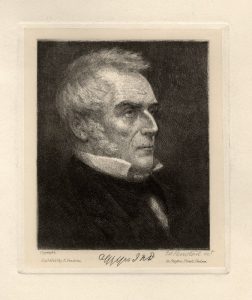
Portrait of John Nelson Darby
© National Portrait Gallery, London | Source
Brother Lee says that “the move among the Brethren at the beginning was really marvelous. This was a golden time that was a great help to the church life. Many spiritual, seeking Christians agree that this may have been the beginning of the fulfillment of the prophecy in the Lord’s epistle to the church in Philadelphia in Revelation 3. However, due to the Brethren’s overemphasis on doctrines, they were divided again and again” (The History of the Church and the Local Churches, p. 35).
Many spiritual brothers were raised up by the Lord in this period, including Charles Stanley, George Cutting (who wrote about the assurance of salvation in Safety, Certainty, and Enjoyment), Robert Govett (who saw the matter of Christian reward), G. H. Pember, and D. M. Panton. George Müller, who learned lessons concerning prayer and faith in God’s word, was also raised up in England to live a life of faith.

Portrait of Robert Govett | Source
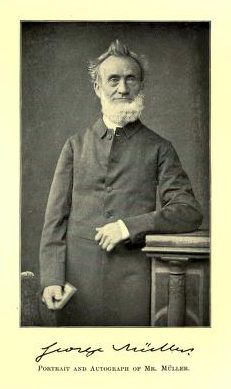 Portrait of George Müller | Source
Brother Nee also points out in What Are We?,
At the same time another group of people were raised up who paid attention to the inner life…After the line of [Robert Pearsall] Smith, there was Mrs. Hannah Whitall Smith…There were also others like Stocknell (?), Evan Hopkins, and Andrew Murray. They continued the line of truth concerning self-denial preached by ones like Madame Guyon two hundred years earlier in the Catholic Church. These believers began to conduct conferences in Germany, England, and other places. These conferences were the beginning of what we know today as the Keswick Convention. The main speaker at these conventions was Evan Hopkins.
In addition to Hopkins, there was H. C. Trumbull who released the truth on the overcoming life at the Keswick Convention. These messages brought in a great recovery concerning the knowledge of the overcoming life and the way for believers to experience this overcoming life in their living.
[Jessie Penn-Lewis, a Welsh sister, was involved in the 1904-1905 Welsh revival, led by Evan Roberts, and] was one who truly bore the cross. Through her experiences, many believers were attracted to pursue the truth concerning the cross. Through these men and women, God led many to realize that the centrality of God’s work is the cross. (Collected Works of Watchman Nee, vol. 11, pp. 852-854)
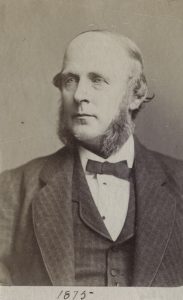
Portrait of Robert Pearsall Smith
© National Portrait Gallery, London | Source

Portrait of Hannah Whitall Smith | Source

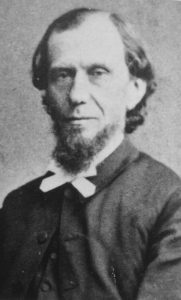
Portrait of Andrew Murray | Source
 Portrait of Henry Clay Trumbull | Source

Evan Roberts’ last revival meeting | Source