German-speaking Countries


Germany and Austria
(and parts of Switzerland)

europe

Map of the German-speaking countries showing lampstands | © Amana Trust
(click on or hover over the map to view map labels)

The contents of this page are:


Germany

October 2017 is the five-hundredth year anniversary of Martin Luther’s publication of his 95 Theses and the beginning of the Reformation.
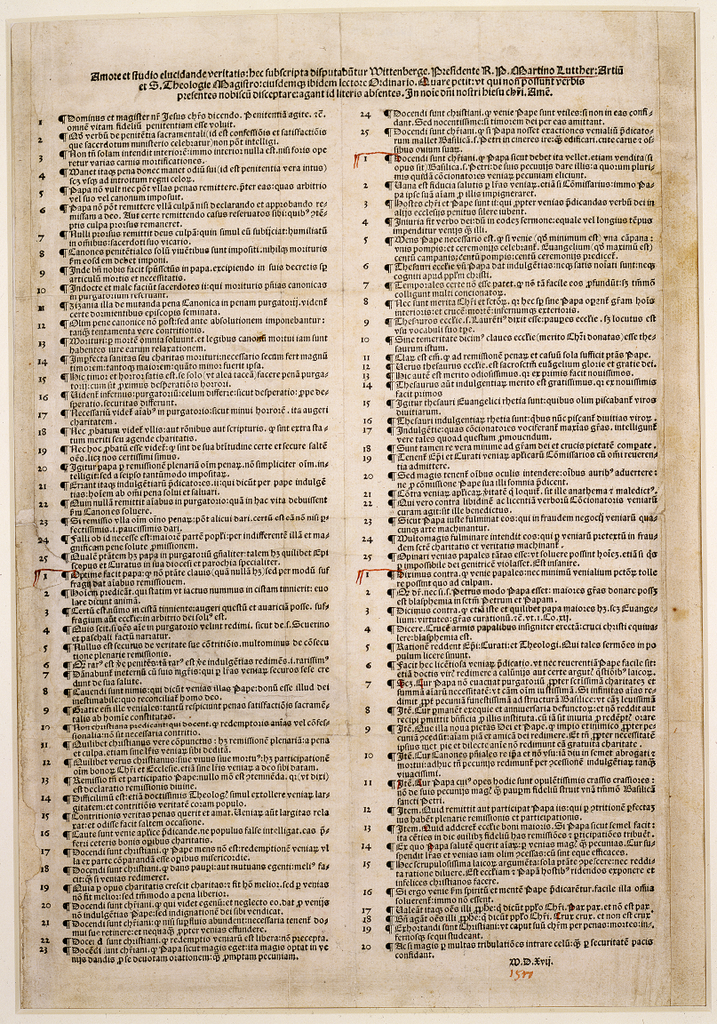
Martin Luther’s 95 Theses SourceLuther, Martin. Disputatio pro declaratione virtutis indulgentiarum [95 Theses]. Nuremberg: Höltzel, 1517. In Digitiser: State Library of Berlin. Uploaded on August 22, 2016.  Accessed on October 01, 2017 via Wikimedia Commons. [Public Domain]

Martin Luther was born in 1483 in Eisleben, Germany. Originally planning to study law, Luther later decided to dedicate his life to God and become a monk, after he was almost struck by lightning. While at the St. Augustine monastery in Erfurt from 1505 to 1511, Luther lived a very strict life and was tormented by his sense of guilt, confessing excessively and believing that only physical suffering could bring him closer to God. However, he could not find peace. During this time of struggling, Luther began reading the Bible. One day, while in Psalm 22, he read the first verse: “My God, my God, why have You forsaken me?” Luther realized that this must have referred to Christ and that God forsook His Son because He bore all of our sins. Gradually, Luther realized that one’s sins were not forgiven by outward ritual or behavioral changes; forgiveness was through faith in what God accomplished in Christ.

Portrait of Martin Luther | SourceMartin Luther (Brustbild im Rechteck mit faksimiliertem Namenszug). In Museum im Melanchthonhaus Bretten (Inv.Nr: P Luth 88). Accessed on October 06, 2017 via Museum-Digital:Baden-Württember. [CC BY-NC-SA 3.0]

On a visit to Rome, Luther saw the wealth and corruption of the Roman Catholic Church and became disillusioned. Luther testified of his regeneration as being at the time that he read Romans 1:17: “The righteous shall have life and live by faith.” Receiving this revelation and being influenced by the legacies of Huss, Wycliffe, and other reformers, Luther began to develop the main ideas of the Reformation—the centrality of the Bible and justification by faith. On October 31, 1517, Luther published his 95 Theses in Wittenberg on the corrupt practice of selling indulgences. In 1520 and again in 1521 at the Diet of Worms, he refused to recant. His famous response in 1521 was, “Here I stand; I can do none other so help me God.” The next day he said,

Unless I am convicted by the testimony of the Scriptures and clear reason—I do not trust the authority of popes and councils, for they have contradicted each other—my conscience is captive to the Word of God. I cannot and I will not recant anything, for to go against conscience is neither right nor safe. God help me. Amen. (Quoted from Roland Bainton, Here I Stand, Lion Publishing, 1953, p. 185)

After this trial Luther was kidnapped by his friends and brought to Wartburg Castle, where he translated the New Testament into German. Luther’s translation and his stand for the truth revolutionized Germany and Europe. His close relationship with the German princes who protected him, however, linked Lutheranism with the German state church, and this practice spread throughout northern Europe.

Regarding Luther’s legacy, Brother Lee says, “Eventually, the Lord used Martin Luther in the sixteenth century to unlock the Bible, to release the Bible from ‘prison.’ The interpretation of the Bible advanced during this time of the Reformation with the recovery of the truth concerning justification by faith” (The World Situation and the Direction of the Lord’s Move, p. 29).

The Reformation began around 1517. Martin Luther had no intention to rebel against the Catholic Church. His writings show that his intention was only that the doctrine of justification by faith would be made clear to the people. However, after Luther many reformers began to leave the Catholic Church. Luther made a mistake when he supported the establishment of state churches in Germany. This mistake resulted in the formation of many state churches in Germany and abroad. The state churches separated from the Catholic Church, yet they kept many organizational aspects of the apostate church, especially the hierarchy of the clergy. This organization kills the function of the members. Today in the Catholic Church and in the state churches, the members do not all function. Hired clergy carry out spiritual functions for the lay people. (The Recovery of Christ in the Present Evil Age, p. 35)

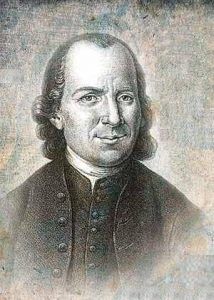
One of Luther’s contemporaries in Germany also recovered important truths. Caspar Schwenckfeld, originally from Silesia (a region that covered Poland and small parts of Germany and the Czech Republic), emphasized the need of the subjective experience of the truths. He saw that justification should not be just a doctrine but should result in life. He even used the term the life-giving Spirit and saw the truth of transformation by God’s life.
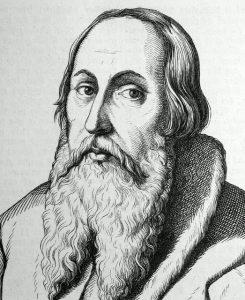
Portrait of Caspar Schwenckfeld SourceUnknown Illustrator. de: Caspar Schwenckfeld. In Zweihundert deutsche Männer in Bildnissen und Lebensbeschreibungen, by Ludwig Bechstein, Leipzig : Wigand, 1854.  In Visual Library. Accessed on October 06, 2017 via Wikimedia Commons. [Public Domain]

Regarding Schwenckfeld, Brother Lee says, “Although Schwenkfeld was not as famous as Luther, he did see something along the line of the Spirit and life” (Perfecting Training, pp. 35-36).

Caspar Schwenckfeld saw that justification must result in life. He may be regarded as one who touched not only the “skin” of the revelation in the Bible, but also began to see the “meat” under the skin. One day I was very surprised to learn that Schwenckfeld used some of the expressions we use today to speak of life. He even spoke of the life-giving Spirit. My point in referring to Luther and Schwenckfeld is to say that the Lord wants to recover not only the skin, that is, certain fundamental doctrines; He also wants to recover the meat under the skin of the Word. (Life-study of 2 Corinthians, p. 166)

Philipp Jakob Spener and the Pietists continued the recovery of the experience of Christ as life in the late seventeenth century. Reacting against the deadness of Lutheranism, the Pietists emphasized the experience of the Holy Spirit, the functioning of the believers, and the gathering in homes.
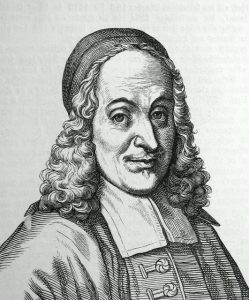
Portrait of Philipp Jakob Spener | SourceUnknown Illustrator. Philipp Jacob Spener. In Zweihundert deutsche Männer in Bildnissen und Lebensbeschreibungen, by Ludwig Bechstein, Leipzig : Wigand, 1854.  In Visual Library. Accessed on October 06, 2017 via Wikimedia Commons. [Public Domain]

Brother Nee says of Spener,

At this time in Germany, God raised up Philipp Jakob Spener. He became a pastor in a Lutheran Church in Frankfurt in 1670. By that time the Lutheran denomination had fallen into a kind of formal religion. By reading his Bible, Spener found out that the church at his time was full of human opinions, something forbidden by God. He saw that the believers should return to the teaching of the New Testament. For this reason he began to lead others into the practice of 1 Corinthians 14. In his meetings he began to teach others to reject the traditional formalities and to follow the leading of the Holy Spirit. Unfortunately, his practice did not last long. (Collected Works of Watchman Nee, vol. 11, “The Present Testimony (4),” pp. 846-847)

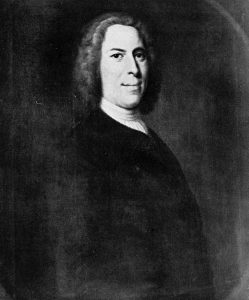
Spener was a godfather of Count von Zinzendorf, the leader of the Moravian Brethren in Herrnhut. The Moravian Brethren were originally from Bohemia and Moravia, in the present-day Czech Republic, but fled their homeland because of persecution. In 1722 Count von Zinzendorf welcomed them to his estate in Saxony, which is in the eastern part of Germany. They built a small community at Herrnhut, and there they recovered the unity of life among the believers, returned back to the organic function of the church, and began overseas missionary work. In 1727 Zinzendorf asked all of the refugees to be in harmony, and when they broke bread together for the first time, the Holy Spirit was poured out upon them. Moved by the Spirit, they were burdened for the spread of the gospel to the entire earth, and they began to pray continuously, 24 hours a day, 7 days a week. This prayer lasted one hundred years and became the driving force for the sending out of hundreds of believers to preach the gospel. The Moravian Brethren also had a great impact on John and Charles Wesley.
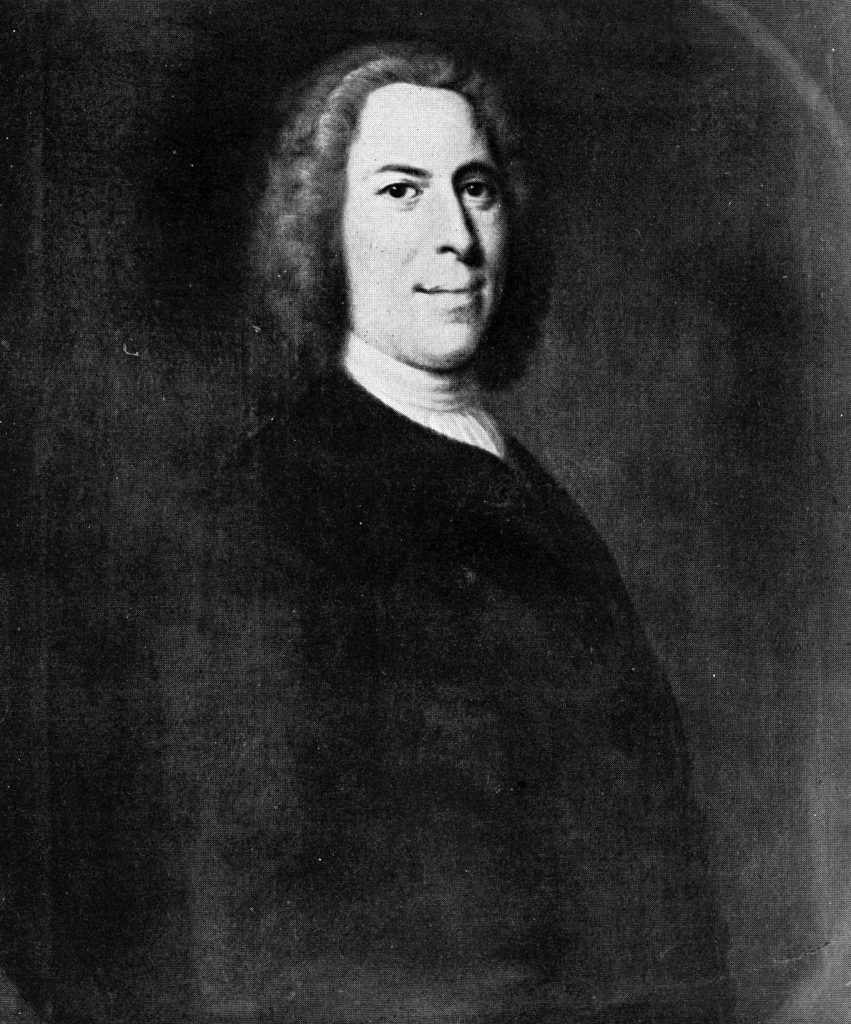
Portrait of Count von Zinzendorf | SourceBalthasar Denner. Nikolaus Ludwig von Zinzendorf.  In Die großen Deutschen im Bilde. By Michael Schönitzer. 1918.  Accessed on September 28, 2017 via Wikimedia Commons. [Public Domain]

The Lord continued to move in Germany in the twentieth century, when the ministry of the age brought many young believers into the Lord’s recovery. The church life began in 1971 in Freiburg, Germany, and in 1974 all of the saints migrated to Frankfurt. The Normal Christian Life and other books of Watchman Nee’s ministry had been distributed in Germany prior to this time, and small groups of believers were reading the books. The beginning of the church life in Germany reflected what was happening in Elden Hall in Los Angeles around that time. Saints testified of the rich enjoyment of calling on the Lord, pray-reading the Word, and the strong exercise of the spirit. Those who entered the church life at this time testified of the light and life they experienced. Groups of Christians began leaving their denominations and free groups to come into the church life. Many of the young people lived together in corporate living, where they had morning watch together. Several saints from a smaller town near the border of Switzerland and Austria called Friedrichshafen came into the church in the 1970s and began the Lord’s table in 1980. In 1976 many saints migrated to Stuttgart. This is where Brother Lee visited to hold conferences in the late 1970s and early 1980s. During this time, he gave messages that became hallmarks of his ministry, such as The Kernel of the Bible (1977) and God’s New Testament Economy (1984). Stuttgart was also where saints began printing Life-study messages in German. The church life was also spreading to a number of other places in Germany, Switzerland, and Austria.

Several churches in Europe were helped by fellowship with Germany, since it had the most established churches and the most saints. Some of the brothers who eventually became pillars in the church life in London came into the church life in Germany.

In the early 1980s the church life in Germany was affected by the publication and the subsequent translation of The God-men (a book opposing the Lord’s recovery) into German. However, despite the persecution by some of the saints’ families and from Christianity, the saints continued to stand with Brother Lee’s ministry. But by the middle of the 1980s a turmoil began to brew in Germany, around the time that Brother Lee began the full-time training and began speaking on the God-ordained way. A number of saints from Stuttgart went to Taipei to join the training for forty days, but the leading ones in Stuttgart became negative, and their negativity affected many of the saints. Brother Lee sent six brothers to Stuttgart to speak with the saints, but trouble spread throughout Europe, with the result that about a thousand saints in Europe were lost at the time.

There was still a remnant, however. According to the testimony of a brother, a major factor of his and his wife’s remaining in the Lord’s recovery was their experience in Taipei and of blending with the saints from all over the earth. The continual visits of brothers from the US and London sustained the saints. Some of the saints went back to Christianity and to the world, but more than a decade later, the Lord turned them, brought them back in contact with saints and back into the church life. A small number of saints in Switzerland also remained, and they had regular fellowship with each other. The saints continued to go on, holding video trainings, coming to the live trainings, and meeting in their various localities.

After the fall of the Berlin Wall and the reunification of Germany from 1989 to 1990, saints in the Lord’s recovery were burdened for the move of the Lord in Germany, and some saints were sent to serve and distribute the ministry in Berlin. A Lebensstrom bookstore was set up in Berlin in 1996. Along with the publication work in German, the church in Berlin was established between 1996 and 2000. Following a one-month migration training in late 2000, twenty saints from the US, the UK, and Russia came together with those meeting in Berlin to help further establish and build up the Lord’s testimony there. In addition to beginning to contact students on local campuses, a wide door was opened throughout the country to contact and shepherd those of German descent who had already been and were constantly being repatriated to Germany from the former Soviet Union. Most of those contacted were already believers, and many had been in the newly established churches in the former USSR. The Recovery Version of the New Testament and free ministry publications in the Russian language played a large role in gaining this increase. More than two hundred had been contacted, and around seventy had been gained by 2004, mostly in former West Germany, as the free ministry publications and the Recovery Version of the Gospel of John in German first became available. During the 2009 spring conference in Germany, there was a call for saints to pray and consider moving to Berlin to strengthen the church life further. A number of German saints, largely from among these repatriated ones, responded to the call for migration. One year earlier, in 2008, a cluster of FTTL graduates were sent to begin the church life in Düsseldorf. Several saints also moved to Frankfurt in 2011 for the church life. In addition to all the migrations, the German Recovery Version of the New Testament was published in 2010.

More recently, the refugee crisis, which began in 2015, has had a significant impact on the churches in Germany in relation to the Lord’s current move. From 2015 to 2016 Germany took in more than 1 million refugees from Syria, Afghanistan, Iraq, Iran, and other countries. They were fleeing from civil war, repressive governments, and economic hardship.
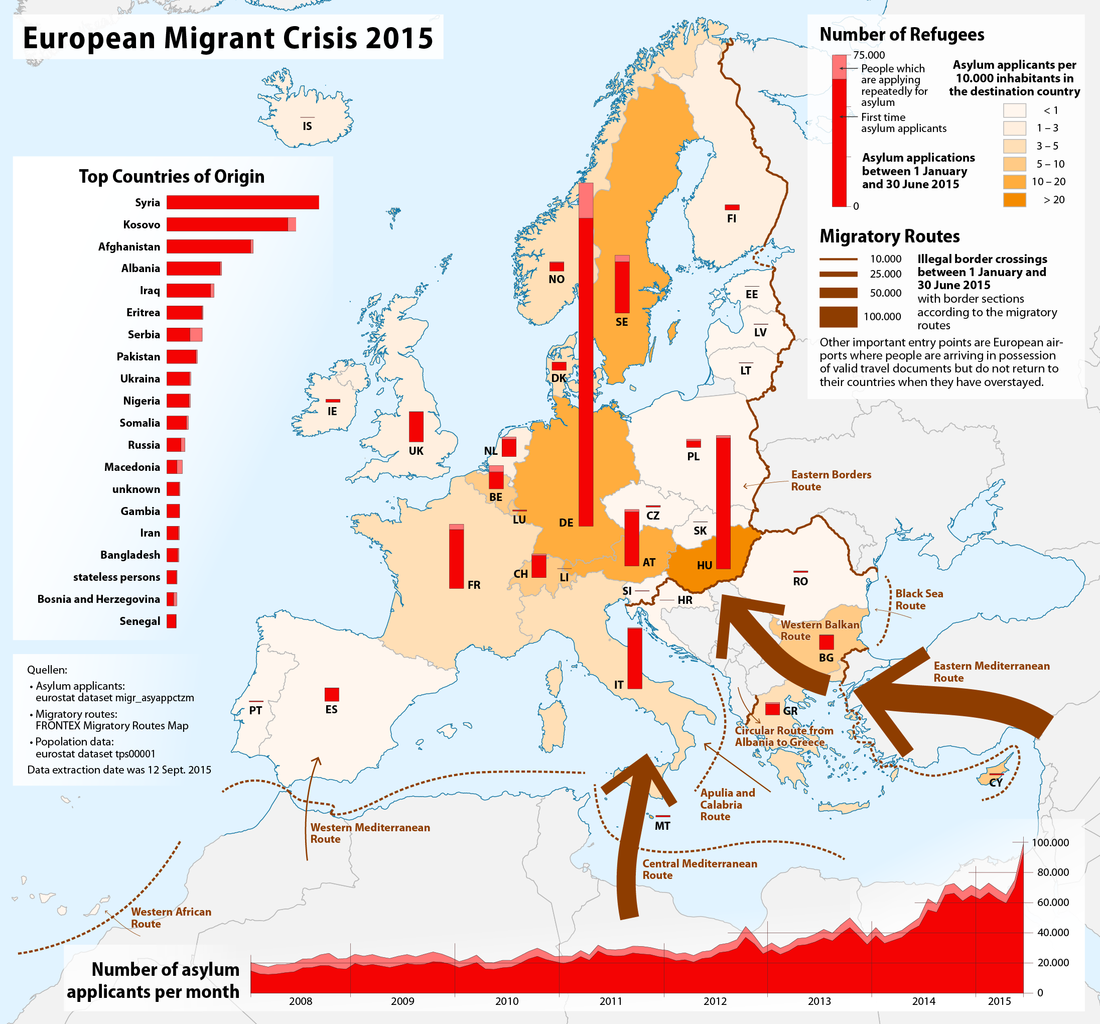
Map of the European migrant crisis 2015 | SourceEuropean Migrant Crisis 2015. In Wikimedia Commons. By Maximilian Dörrbecker. Accessed October 1, 2017. This file was derived from: Refugee crisis in Europe Q1 and Q2 2015.svg by Furfur [CC-BY-SA-2.0]

This sudden, large movement of peoples from the Middle East into Europe sparked a strong burden in the Lord’s recovery for Germany. Scouting trips were undertaken in the autumn of 2015, saints from Europe and the US migrated to key cities in Germany (Berlin, Düsseldorf, Frankfurt, and Stuttgart), and saints from all over the earth participated in gospel trips to these four cities. They visited the refugee camps, preaching the gospel and nourishing the new believers from the Middle East, and preached the gospel on the university campuses to German students. Shepherding trips (2016-2017) continued the initial work of these gospel trips, and more saints have since migrated to Germany.

A migration training was held in the summer of 2017, and in the autumn several saints will emigrate to Germany for the Lord’s move. They will first move to Düsseldorf for blending and language studies before being sent out to either strengthen existing churches or to begin new churches in Germany. 


Austria

By the year 1545, shortly after the Reformation began in Germany, approximately half of Austria had been converted to Lutheranism, but as a result of the Counter-Reformation, the dominant influence of the Roman Catholic Church was quickly restored. Today the majority of the Austrian population is considered Catholic.

The development of the Lord’s recovery in Austria is still in the initial stages. In the 1990s a few saints migrated to work or study in Vienna. A couple living in Switzerland began to visit them in 1999, and they continue to visit the saints in Austria.

In 2002 a brother with his family moved from the Netherlands to work in Vienna. He had a burden for the church life and opened his house for meetings, until they had to move to Australia. The saints continued to meet at a young couple’s apartment up to the end of 2006. In the following years, there was no open home for shepherding, but a sister from Malaysia kept in contact with the other saints who were in Vienna.

In 2011 a sister brought her friend to her home to be baptized by two brothers from Switzerland and Bratislava. Since then, a few saints began to meet regularly on the Lord’s Day, and the Lord has added more members to the church life. In 2015, with the help of other saints, an apartment was rented for meeting. Today there are about twenty saints in Vienna, with a new Austrian brother having recently started to meet.

In 2011 a brother, who was a pastor in Salzburg, began to contact the ministry and brought his group into fellowship with the saints. They are now meeting as the church in Salzburg and have been participating in the annual conference and blending meetings in Germany and the one-week trainings in London. They are in fellowship with the saints in the other localities in Austria regarding blending together.

In 2016 a Romanian couple living in Graz (the second-largest city in Austria) were contacted by the saints. This couple began meeting with a sister in Graz, and later, a couple who were relatives of the Romanian sister also joined them in fellowship. In January 2017 some saints from Vienna, Switzerland, and Bratislava went to Graz for a blending meeting, and the sister’s son was baptized. The saints are praying that the Lord would strengthen His testimony in Graz.

Posted on

French-speaking Countries


France (and parts of Belgium,
and Switzerland)

europe

Map of French-speaking countries showing lampstands  | © Amana Trust
(click on or hover over the map to view map labels)

The gospel reached France during the time of the Roman Empire. Lyon was a major center of Roman power in the region, and several Christians from Asia Minor arrived in the second century. In A.D. 157 Irenaeus, who had been in Smyrna and under the teaching of Polycarp, was sent to Lyon. The spread of the gospel resulted in persecution by the Roman Empire, and the amphitheater in Lyon was the site of many martyrdoms. Christianity became rooted in France under Constantine the Great while it was part of the Roman Empire and has remained a strongly Catholic country through the centuries.

Roman amphitheater in Lyon, France | SourceBloch, Vincent. Theater von Lyon. 2005. In Wikimedia Commons. March 13, 2013. Accessed on September 28, 2017. [Public Domain]

In the twelfth century, however, some French believers rose up against the corruption they saw in the Catholic Church. Led by Peter Waldo from Lyon, they were called the Waldensians, and they practiced lay preaching, voluntary poverty, and strictly adhering to the Bible. Waldo also commissioned the very first translation of the New Testament into the vernacular (Arpitan, a Franco-Provençal language). Persecuted by the Roman Catholic Church, the Waldensians fled to the mountainous regions of northern Italy and centuries later joined with the Reformed-Calvinist branch during the Reformation.

France played an important role in the Reformation. John Calvin was born in France, but soon after he published his Institutes of the Christian Religion, which set forth reformist ideas, he was forced to flee and went to Geneva, Switzerland. He continued to experience persecution and exile wherever he went, but he made a major impact in Europe, reaching even Scotland.

Brother Nee says regarding him, “In 1536 John Calvin was raised up by God. He was one of the greatest vessels of God in that age. After he was raised up, he faced persecution everywhere, first in Switzerland and then in Germany. Wherever he went, he was met with persecution and exile. Finally, in Scotland he had a fresh beginning and established the Scottish Presbyterian Church” (Collected Works of Watchman Nee, vol. 11, p. 846).

Calvin recovered the truth of predestination, seeing that salvation was not initiated by man but by God and that predestination is eternal and unchangeable. Calvin’s writings inspired believers in France, who became known as the Huguenots. The Huguenots were consistently persecuted by the French state and by the eighteenth century were almost wiped out. However, the French Revolution in 1789 established freedom of religion and the principle of laïcité, a strict separation and non-involvement of church and state.

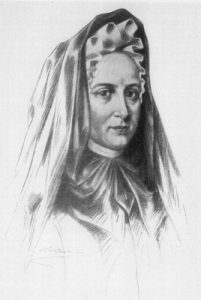
In the seventeenth and eighteenth centuries the Lord raised up the “mystics,” a group of believers in the Catholic Church. Regarding them, Brother Nee says that “there was the recovery of the inner life. Madame Guyon, Father Fenelon, and others brought in a recovery of the spiritual condition. These ones are now generally called the mystics. They practiced denying their self, joining themselves with God to oppose their self, giving no excuse to the self, and not asking God to spare His hand on them” (Collected Works of Watchman Nee, vol. 57, “The Resumption of Watchman Nee’s Ministry,” p. 53).

In the late twentieth century, the ministry of Watchman Nee and Witness Lee began to be distributed and sold in France after a gift was given to set up ministry bookstores in Europe. In 1996 a bookstore was opened in central Paris, and the publication of The Stream magazine in the French language began. A family was sent to Paris that same year. In 1997 an agreement was signed by the largest Christian book distributor in France for four thousand French language copies of The Overcoming Life by Watchman Nee. Over twenty-five Watchman Nee titles have since been published and are being sold in most of the Christian bookstores in the French-speaking world.

After the migration of several families to Paris in 1997, a Lord’s Day meeting began in one of the saints’ homes with around ten adults and six children. In 2000 the church in Paris held their first Lord’s table meeting. In 2006 the saints began to preach the gospel together on the street by the Metro station with distributing the Rhema cards and introducing the Recovery Version of the Gospel of John to those passing by. They sensed the stubbornness of the people’s hearts and sought prayer through the Body. After five years the Lord answered the prayers by opening the door to the gospel and truth in 2012. In the same year, the church in Paris followed in the flow from the Bible distribution in the UK during the Olympic games. The saints were surprised by people’s openness in France toward the Bible, the Word of God. Since then, more and more young native French people have become remaining fruit, gradually though slowly. In addition, the visits of trainees from FTTA and FTTT have helped strengthen the gospel spirit in France.

The church in Paris is also laboring to build up little by little the church life in the God-ordained way—gospel preaching, shepherding the new ones in the homes, the group meetings, and the Lord’s Day prophesying meeting. Presently, there are around twelve group meetings that meet on a weekly basis. Also, the saints enjoy blending with the churches in the francophone world. The saints in the church in Paris are beneficiaries of the ministry of Christ. Recently more and more saints have been joining the semi-annual trainings on the crystallization-study of the Bible, and around thirty to forty saints join the video-training in Paris.

Today the church in Paris meets in two districts, one in the center of Paris and the other in the suburb of Nanterre. The church life has continued to spread in France through the distribution of the ministry, migration of saints from abroad, and students studying at French campuses.

The church in Lyon began with a few Chinese-speaking students and has been strengthened by the migration of several families. In 2003 three Chinese-speaking students, who heard the gospel and received salvation in other French cities and who were being shepherded by the church in Paris, started the Lord’s table in Lyon. The next year the number of saints grew to seven. The students continued to be shepherded by saints from the church in Paris and saints from Geneva, Switzerland. In 2005, during the Paris international conference, the students met a Colombian sister and her children who had immigrated to Lyon the previous year. They started to meet together, and French became their common language. Over the next two years, the gospel was actively preached at several Lyon campuses; many Chinese-speaking students were saved and brought into the church life. In March 2007 one of the co-workers came to Lyon to give a conference. The following year, after seeing the needs of the saints in Lyon, one couple from Malaysia, who graduated from FTTT in 2001 and had been serving full time in Russia and Malaysia, moved to Lyon as students. Shortly afterward, two families from the US answered the call through the Lord’s Move to Europe (LME) and moved to Lyon. In summer 2009 a couple with four children moved from a city 300 km south of Lyon to strengthen the church in Lyon. From 2009 the church in Lyon has continued to receive the rich supply from the ministry through the French literature translation work and the visiting of full-time trainees from all over the world.

In 1987 some believers living around the city of Dieppe in Normandy came into contact with the writings of Watchman Nee and were profoundly affected by what they read. In 2004 they began to enjoy Brother Lee’s ministry, and in 2005 a group of them attended the April French-speaking conference in Paris and entered into fellowship with the churches in French-speaking Europe. Today they are meeting as the church in Neuville-lès-Dieppe.

The church life began in Bordeaux when siblings from Taiwan, who were burdened for Europe, moved there around twelve years ago.  Many saints from their locality had prayed for Europe. Thus, when they started to live in Bordeaux, these siblings had a strong burden to contact students daily, preach the gospel on the street, and lead the saved ones to have a corporate church life. Under the Lord’s mercy and blessing, they gained a large number of Chinese-speaking students. At that time, they endeavored to read the Bible, seek the ministry, distribute Rhema cards, and take every opportunity for blending in the conferences. Years after the siblings left Bordeaux, the ones who were under their shepherding still continued the burden to stand with the church. Some of them found jobs and settled with their families in Bordeaux. Between 2010 and 2012 several FTTT graduates settled and started to study French in Bordeaux. The Lord used them to strengthen His testimony again. A sisters’ house and a brothers’ house were established to encourage a corporate God-man life in Bordeaux. In the years since, the Lord has brought many young students to live together and experience a wonderful corporate Christian life. Some of them remained in France and grew to be pillars in the church life. Under the Lord’s blessing, in the past five years, more and more couples and their children have been added into the church life. By 2016 there were around twenty-five adults and ten children in the church life, composing eight families (five Chinese-speaking families, two English-speaking ones, and one French family) plus one sisters’ house. Curently, in 2017, although some of the saints moved away from Bordeaux, there are still five to six families holding the testimony there.

In the 1980s, before the turmoil, there was a Lord’s table in Strasbourg. Recently, in the late 2000s some saints from abroad moved to Strasbourg to study. A year later a French sister also moved to Strasbourg to study. There were three sisters meeting regularly once a week by the end of 2010. By 2013 more saints had moved to the city, and a more established church life was formed with a prayer meeting, Bible-study group, and the Lord’s Day gathering each week. More saints were added by being recovered, through the gospel, and through migration. The FTTA gospel trip visited Strasbourg for the first time in 2017, and there are regular visits from the saints in Taiwan.

Currently, there are churches in the following cities: Paris (130 saints), Lyon (34 saints), Neuville-lès-Dieppe (25 saints), and Bordeaux (20 saints).

There are also groups of saints gathering in Lille, Montpellier, Strasbourg, and Toulouse. Through the publications of the ministry and regular visitation by the saints, there are groups of believers being raised up in other cities such as Cergy, Mantes-la-Ville, Plaisir, Nemours, Rouen and Aubervilliers.

The Recovery Version of the New Testament in French was published in 2007, and The Holy Word for Morning Revival began to be published in 2009. The standing order for all the new French publications began in 2014, and there are now over one hundred saints registered for the standing order. Today there are more than two hundred saints in France and four cities with a lampstand.

Through the spread of the ministry in the French language, there are now saints meeting in the following French-speaking countries: Martinique and Guadeloupe in the Caribbean, Benin, Togo (the first table meeting in Lome, Togo, was held in August 2017), Cameroon, Congo, Ivory Coast, and Madagascar in Africa.

Posted on

Nordic Countries


Denmark, Finland, Iceland, Norway,
and Sweden

europe

Map of the Nordic countries showing lampstands  | © Amana Trust
(click on or hover over the map to view map labels)

Through Martin Luther, the Reformation spread throughout northern Europe in the sixteenth century. However, the Nordic countries (formally defined as Sweden, Norway, Denmark, Finland, and Iceland) followed the pattern of Germany to adopt Lutheranism as the state religion. Recently, in the 2000s each country, except Denmark, has decided to separate the Lutheran church from the state. Today the Nordic region is known for its declining number of believers and widespread secularism.    

However, the Lord has moved and is continuing to move with the ministry of the age in the region. The first contact the Lord’s recovery had with Scandinavia was in 1938-1939 when Brother Watchman Nee was invited to Europe to visit T. Austin-Sparks’s group in England and also to visit believers in Norway, Denmark, and Sweden. Some of the messages spoken during this time in Europe were compiled to be the book The Normal Christian Life. The saints in the Lord’s recovery also knew and contacted Swedish and Norwegian brothers and sisters who had labored in China as missionaries in those early years. Brother Lee would sometimes speak about a Norwegian missionary in China who preached the reality of regeneration to an unsaved Lutheran pastor. He also recounted that “in 1943 we had a migration of seventy saints with their families from Chefoo to Inner Mongolia. Not one had even finished high school. Some of them were shoemakers. Eventually, within one winter, they turned more than forty Swedish China Inland Mission churches to the recovery. This is the operation of life” (Crystallization-study of the Epistle to the Romans, p. 120).

Later, in 1958 Brother Lee made a trip to England and Scandinavia. Regarding his time in Scandinavia, Brother Lee reported to the saints,

We stayed in Denmark for about ten days and saw that there is much work to do there. Their situation exceeded our expectation. This proves that the Holy Spirit began His work long before we arrived. This does not apply only to Denmark. The Lord’s work can be seen in all of Scandinavia, including Norway and Sweden. We met many promising brothers who requested that we send them The Ministry of the Word so that they can translate it into their language. If time permits, we will visit them again, because there is much work to do there.

Two brothers from Norway came to meet us, and we had good fellowship with them. The impression I have from the trip to Denmark is that all the places in Scandinavia need to be led to know Christ as life so that God’s house can be built up in every locality. The Scandinavian countries have state churches that are formal and dead. Hence, many people become “homeless” once they believe into Christ. There is a need for them to know life so that God’s house can be established in every locality. (The Perfecting of the Saints and the Building Up of the House of God, pp. 109-110)

Eventually, in the 1970s the Lord’s recovery reached Scandinavia again when some saints in Sweden came into contact with Brother Lee’s ministry, and around 1975 a group of brothers from Germany and the US visited them. A small group saw the vision of the church and began to meet in homes in southern Sweden. They had fellowship with believers in Denmark and also went to a conference in Stuttgart, Germany. In 1980 a Swedish family moved to Stockholm for the establishment of the church life, but they were eventually isolated because of the turmoil in the churches in Europe in the late 1980s. However, they were encouraged and strengthened by the visitations of brothers travelling from the US to Russia in the early 1990s.

A young man from Korea was gained in Denmark in the late 1970s, and after moving to Sweden, he joined the church life in Stockholm and eventually decided to serve full time in 1996 after fellowship with Brother Lee. In the same year Brother Lee donated a considerable number of books so that the saints could open a bookstore in Stockholm.

Visitations from Sweden also helped to raise up the church life in Norway in the 2000s, although a foundation had been laid earlier. A brother from Southern California made frequent job-related visits to Norway from 1987 to 1996 and was faithful to spread the ministry through distributing tracts and visiting believers. One sister was gained from this period, and she began opening her home near Oslo for meetings. In 2003 a Norwegian couple touched the ministry in Asia, and upon returning, they began to meet in their home and present the ministry to believers. A third group in west and south Norway discovered the ministry on the Internet and began to listen to the Life-study radio programs in 2004. These three groups realized one another’s existence in 2004, and in 2008 the first Lord’s table meeting in Norway was held in Grimstad after the migration of a few saints to that city. In 2011 the first Lord’s table meeting was held in Oslo.  

After the turmoil in the late 1980s, fellowship between Denmark and Sweden stopped, but in the 2000s saints who had been in the church life in Asia, the US, Africa, and other parts of Europe began to move to or have short-term stays in Denmark. One Danish sister was connected with the saints through listening to online broadcasts from Living Stream Ministry in Anaheim. Since 2010 a group of saints have been meeting regularly in Copenhagen, enjoying the ministry and participating in conferences and trainings. They have been strengthened by regular visits from saints in Norway and Sweden since 2014. The first Lord’s table meeting in Copenhagen will be held in October 2017.

One family of three in Iceland has been in contact with the ministry and has attended several of the Nordic conferences.  

Some saints in Finland came into contact with the ministry in late 1970s and early 1980s. They had contact with the churches in Sweden, California, and Germany and began to meet as the church in Helsinki. The church was very much affected by the turmoil among the European churches in the late 1980s. Nevertheless, a small number stood firm with the ministry and were much supplied through the visits of saints from the US, who used Helsinki as a transit point to bring Bibles and Christian literature into Russia. Today the church in Helsinki has a clear sky and follows the Lord’s move in the Body.

In recent years there has been regular fellowship and blending among the Nordic churches with the twice-yearly regional conferences and joint brothers’ meetings, as well as frequent visits among the saints. There is also much blending with European churches through the European-wide conferences in London and the Netherlands, as well as through semi-annual trainings and ITERO. The Nordic churches are going on with the Lord for the accomplishment of His eternal purpose and heart’s desire by honoring the Head, following the churches, and participating in the Lord’s move in the Body.

Posted on

The Lord’s Present Move


europe

Map showing the lampstands in Europe and the 8 regions participating in the 2017 blending conferences and trips in Europe.  | © Amana Trust
(click on or hover over the map to view map labels)

Aspects of the Lord’s present move in the eight regions which are hosting the blending and Bible distribution trips, as well as the regional conferences are detailed in the following sections.

Posted on

Summary


From the time of the Roman Empire onward, the Lord has used the historical situation to match His move on earth. God prepared the environment for Christ’s accomplishments and the spread of the gospel during the time of the Roman Empire; He raised up Martin Luther and others to recover aspects of the truth and spread the Word through the printing of the Bible five hundred years ago; and He moved in believers to recover the experience of Christ as life and to recover the oneness of the Body of Christ.

The move of the Lord’s recovery of the truth flowed from Europe to China to Taiwan and, eventually, to the US in the middle of the last century. Based on the foundation in East Asia, it was from the US, with the subsequent development and spread of the church life and the continued release of the ministry of Watchman Nee and Witness Lee in English, that the Lord’s recovery of the truth, the church life, and the gospel eventually spread to every other part of the earth—to South America, to Australasia, to Africa, and back to Europe. The Lord strategically used Europe for His first coming, for the spread of the gospel, and for the beginning of the recovery of the truth and is now preparing Europe for His return.

Posted on

Twentieth Century


The contents of this page are:


The Lord’s Move in China

One hundred years after the beginning of the Brethren movement, the Lord started something new in mainland China. In the eighteenth century the Moravian Brethren were on the continent of Europe. In the nineteenth century the Brethren were used by the Lord in England. A century later the Lord moved in the Far East. (The History of the Church and the Local Churches, p. 3)

Map showing the US, the UK, China, and Taiwan | © Amana Trust

Missionaries from England brought the recovered truths to China, and in the 1920s the Lord raised up Brother Watchman Nee for His recovery. It was through Sister M. E. Barber, originally from Suffolk in England, that Brother Nee was introduced to the top spiritual writings, which conveyed the past centuries’ recovery of truth and experience.

Portrait of M. E. Barber | SourceM. E. Barber by Unknown photographer. In Wikimedia Commons. Unknown upload date. Accessed on October 1, 2017. [Public Domain]

Sister Barber was sent by the Church Missionary Society to Fukien (Fujian) province in China, where Brother Nee was.

While she was there, her co-missionaries fabricated a case against her because of their jealousy of her. Because of these false reports, the mission board called her back. She was a person who knew the Lord in a living way, and she was always exercising to learn the lessons of the cross. When she returned, she made a decision not to say a word in vindication of herself. She stayed in England for a number of years…[until] she was vindicated, and the board immediately made the decision to send her back.

Before that time, she began to know the way of the Lord concerning His church. She came in contact with D. M. Panton, who was a student of the great teacher Robert Govett. Brother Panton came to know the evils of denominationalism, and he met with a group of others outside of the denominations…After Miss Barber contacted D. M. Panton’s group, she became clear about denominations. Then she resigned from her post as a missionary in the Methodist mission. After much prayer she became clear that the Lord would send her back to China according to His leading and not through any mission. (The History of the Church and the Local Churches, pp. 39-40)

Sister Barber resigned from the mission and returned to China to live by faith. She was a deep person in the Lord and an important influence for Brother Nee. From her, he saw a pattern of one who lived Christ and also learned spiritual truths.

Brother Lee shares Brother Nee’s account to him regarding M. E. Barber in The History of the Church and the Local Churches:

Brother Nee came in contact with her soon after his conversion, and he received so much help from her…According to what Brother Nee told me, Sister Barber was a person who always lived in the presence of the Lord…She was a deep person in the Lord, and she composed a number of excellent hymns that are in our hymnal. All her hymns were very deep in the Lord. Furthermore, day by day she was waiting for the Lord’s coming back.

It was through M. E. Barber that he received the foundation of his spiritual life. Brother Nee would tell people that it was through a sister that he got saved, and it was also through a sister that he was edified. As a British person from the Western world, Sister Barber came to know the famous spiritual giants in Christianity at her time. Through Sister Barber, Brother Nee came to know the top spiritual books by people such as Robert Govett, D. M. Panton, and Jessie Penn-Lewis. The best publications on the exposition of the Bible and church history were introduced to Brother Nee through her. (pp. 40-42)

Brother Lee testified concerning Brother Nee:

The first meeting in the Lord’s recovery in China was in 1922 with Brother Nee in his hometown of Foochow  [Fuzhou]. I am full of thanks to the Lord that in the first part of this century He gave Brother Nee as a gift to the Body. I was born in Christianity and raised up there. I even received my education in Christianity. In my seeking of the Lord, I passed through organized Christianity, fundamental Christianity, Brethren Christianity, and even Pentecostal Christianity. I also entered into the teachings of the inner-life Christians. In my entire life, I have never met a Christian who can compare with Brother Nee. I received the greatest and the highest help from him. He picked up good and helpful things from nearly every denomination, from every kind of Christian practice, and from all the seeking saints throughout the history of the church, and he passed them on to us. The first time I stayed with him, I realized that he was standing on the shoulders of many who had gone before him. (The History of the Church and the Local Churches, p. 36)

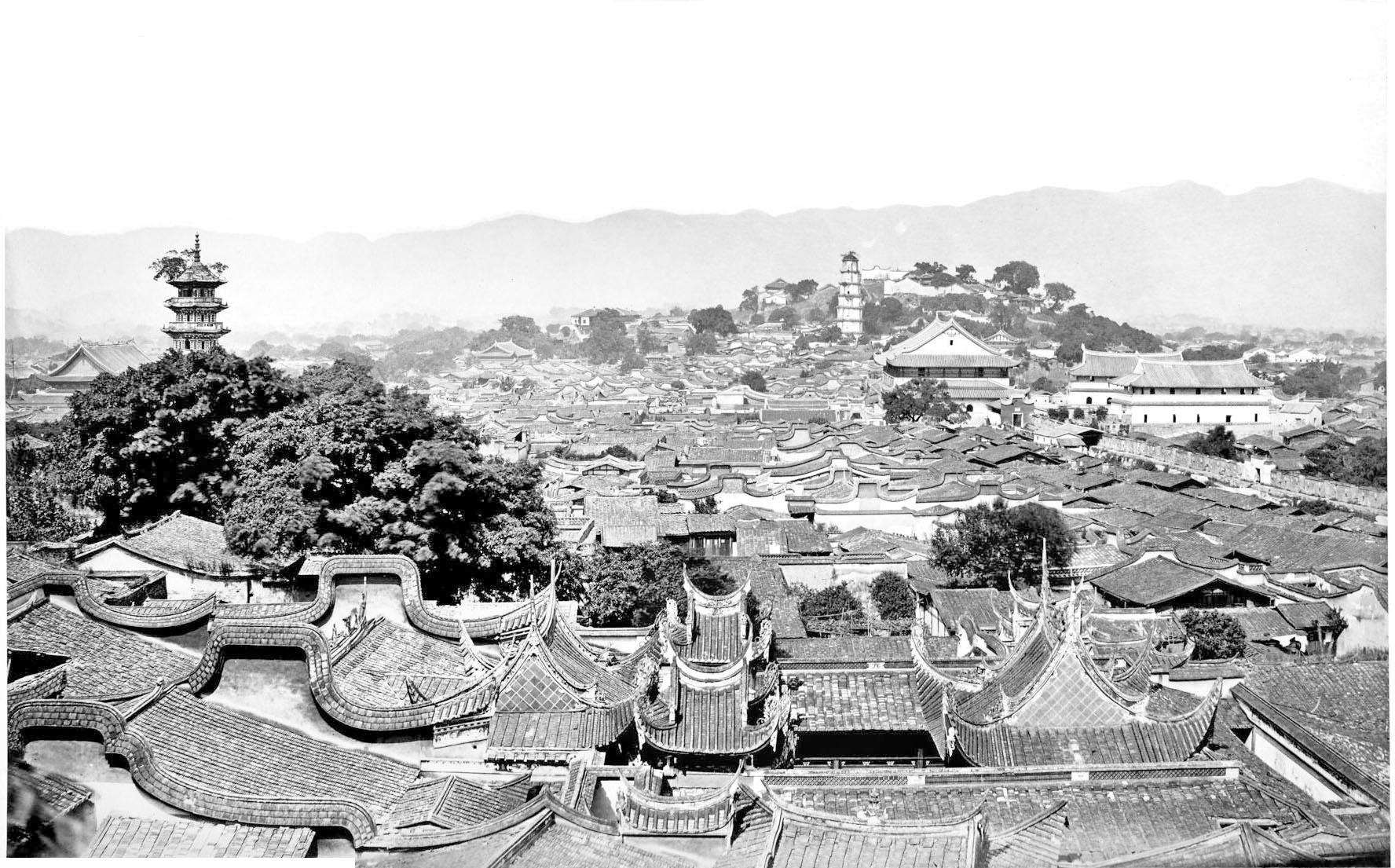
Eastward view of Fuzhou (Foochow), 1900 | SourceMorrison, George Ernest. The Eastward View of Fuzhou (Foochow) from Black Stone Hill, in the late Qing Dynasty. 1900. In Digital Silk Road Project Digital Archive of Toyo Bunko Rare Books, National Institute of Informatics, Toyo. Accessed on September 29. 2017. [PD-old-80]


Witness Lee met Watchman Nee in 1932 and throughout the 1930s and 1940s they were co-workers in China, speaking the truth and raising up churches.


Watchman Nee’s and Witness Lee’s Visits to Europe

Brother Nee visited Europe on two occasions, in 1933 and 1938-1939.

Brother Nee went to visit the Plymouth Brethren in England in 1933. Before that time he had read many of the Brethren’s writings. Also, through Miss M. E. Barber, he became acquainted with the writings of Jessie Penn-Lewis and T. Austin-Sparks. When he went to visit the Brethren in 1933, he also went to visit Brother Austin-Sparks at Honor Oak in London.

Later, Brother Nee went to Europe again in 1938, and he stayed there for one and a half years to have more fellowship. Mostly he was with Brother Austin-Sparks’s group at Honor Oak. He was also invited to speak in some of the Scandinavian countries. In those one and a half years, he ministered mainly on the aspect of Christ as life because he realized that the people there were not ready to accept the aspect of the church in a practical way. The Normal Christian Life is a collection of the messages Brother Nee gave then. (The History of the Church and the Local Churches, pp. 102-103)

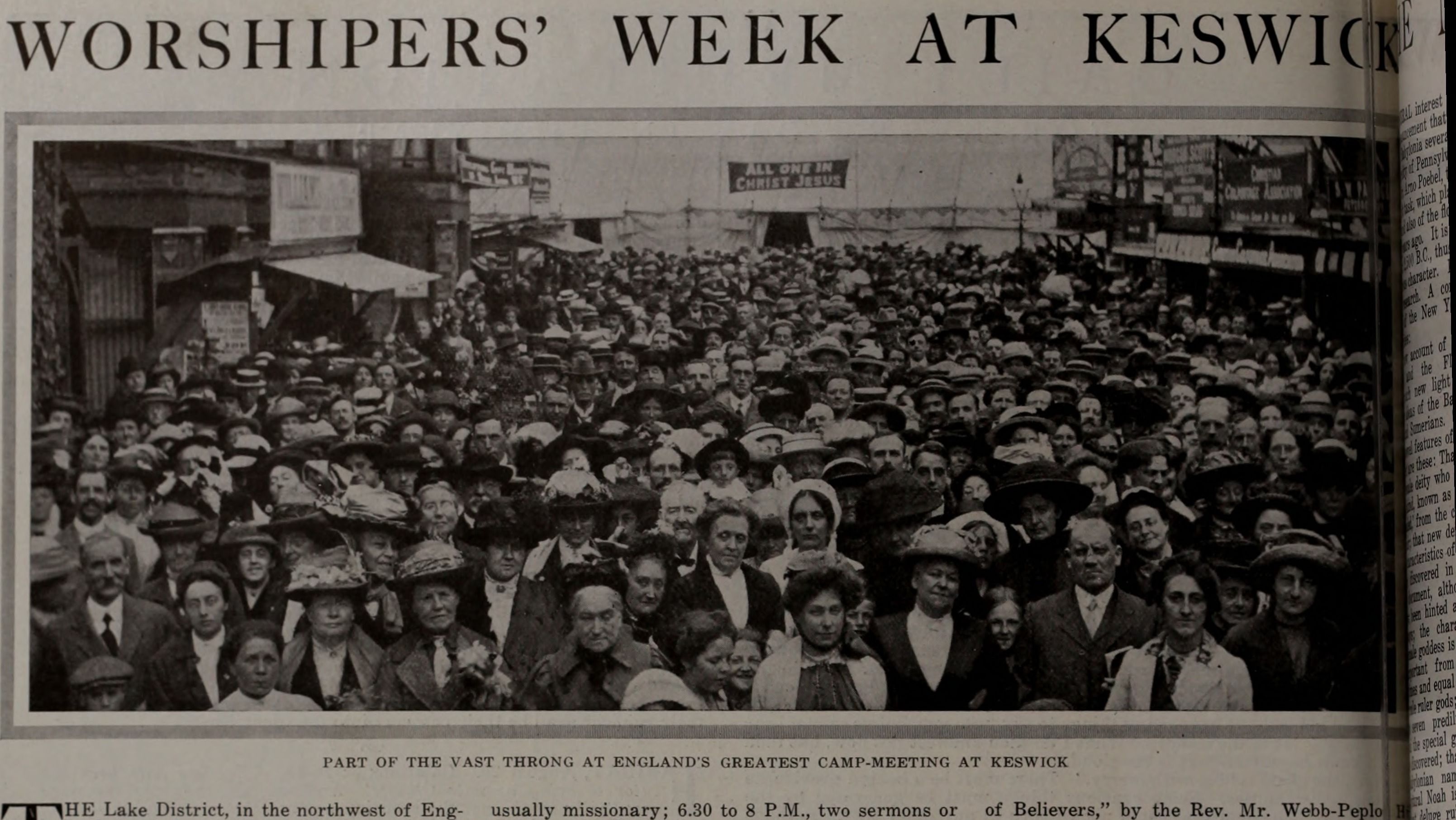
For a number of the saints who met Brother Nee in Europe at that time, their contact with him was life-changing (according to a brother’s conversations with some who had met Brother Nee). During Brother Nee’s visit, in July 1938 he was invited to the Keswick Convention, an annual gathering of Christians who emphasized the experience of the inner life.

Keswick Convention, 1913 | SourceChristian Herald. 1913. Christian Herald Association. In Internet Archive Book Images. Accessed on October 01, 2017 via Flickr Commons. [No known copyright restrictions]

The account in Watchman Nee’s biography says regarding this event,

On July 22 he attended the Keswick Convention with Brother Sparks. In the morning a missionary meeting was held. The chairman of the meeting, Mr. W.H. Aldis, knowing Watchman was present at the meeting, asked him to offer prayer. He hesitated at first, but after checking with Sparks and being encouraged by him, he offered the following prayer: “The Lord reigneth. He is reigning, and He is Lord of all. Nothing can touch His authority. It is the spiritual forces that are out to destroy the interests of the Lord in China and Japan. We do not pray for Japan. We do not pray for China. But we pray for the interests of Thy Son in China and Japan. We do not blame any man. They are only tools in the hand of the enemy of the Lord. Lord, we stand in Thy will. Lord, shatter the kingdom of darkness. Lord, the persecution of Thy church is persecuting Thee.” This prayer was offered in the presence of a Japanese Christian at the time the great havoc of the invading Japanese army was increasing. The whole congregation was both captivated and deeply impressed by this prayer. (Watchman Nee—A Seer of the Divine Revelation in the Present Age, p. 204)

According to Brother Lee,

While Brother Nee was there, he also translated The Normal Christian Church Life from Chinese into English. He did that, of course, with a purpose. This book was translated in London while he was staying at Honor Oak. Miss Fishbacher [a missionary in China who had come into the church life there] helped him in this translation work. That book was printed by the bookroom of Brother Austin-Sparks. After it was published, it stirred up some problems. (The History of the Church and the Local Churches, p. 103)

Although it was printed by the bookroom at Honor Oak, T. Austin-Sparks was not entirely receptive to Brother Nee’s ministry on the practicality of the church.

During this time, Brother Nee testified to Witness Lee “that on the whole earth, there was only one group that could ‘echo’ what we had seen of the Body of Christ. That was Brother Austin-Sparks’s group. Brother Nee, however, said that there was a big ‘but.’ They saw something concerning the principle of the Body, but they did not see the practical side of the church life” (The History of the Church and the Local Churches, pp. 104-105).

[In the summer of 1939,] Brother Nee returned to China and had a conference on the Body of Christ…Furthermore, Brother Nee would minister to the whole church in Shanghai every Wednesday night. He also spent several mornings each week with his trainees…Brother Nee’s fellowship on the Body during that time was the most strategic work of his entire life.

Due to the exposure of the enemy’s subtlety through Brother Nee’s messages during those three years, the enemy caused a big turmoil in the church in Shanghai in 1942. Eventually, the church there was closed, and Brother Nee’s ministry was stopped for six years. (The History of the Church and the Local Churches, pp. 64-66)

At the same time, China was involved in World War II, and at the end of that war, China was plunged into a civil war that would last until the autumn of 1949. During the Communist takeover of China, Brother Nee sent Witness Lee to Taiwan to preserve and carry out the work of the ministry there.

Situation at the end of World War II | SourceChina, 1900-1949 Situation at the end of World War II. West Point. In www.usma.edu. November 5, 2012. Accessed on 30 September, 2017 via Wikimedia Commons. [PD US Army]


Brother Lee’s Visit to Europe in 1958

Brother Lee continued to fellowship with T. Austin-Sparks and with saints in Scandinavia, and in 1958 Brother Lee went to Europe to visit Honor Oak. During this trip, before going to Europe, he also visited Japan and the US.

(For more on these other trips, please see The Perfecting of the Saints and the Building Up of the House of God, chs. 713.)

In England Brother Lee held a conference at Honor Oak and then went to Denmark for another conference. He reported shortly afterward that “of all the places we visited, Denmark had the most positive situation…We did not expect them to meet in their homes, but in a letter I received from them recently, they said they are now meeting in more than twenty homes” (The Perfecting of the Saints and the Building Up of the House of God, p. 109).

He continued, saying, “My overall impression is that there is a need in every place to build up God’s house so that the wandering believers can have a home. If there is another opportunity for me to speak with the children of God, I will say that the greatest need on earth today is to build up God’s house” (p. 109).

Brother Lee shared on the day before he left Honor Oak,

The ministry is for the local churches, not the local churches for the ministry. Regardless of how good, how spiritual, and how high one’s ministry is, it still must be for the local churches. Regardless of how degraded the local churches are, they are still the lampstands…As I walked down from the platform by myself, one of the elders there came to me and said that Brother Nee’s ministry concerning the church and its practicality had been rejected there twenty years ago. He said that the Lord had not forgotten this and sent me there twenty years later to remind them of the same thing. (The History of the Church and the Local Churches, p. 104)

The fellowship with Honor Oak, beginning in the 1930s, however, was eventually used by the Lord for the beginnings of the church life in the US. Brother Samuel Chang (Watchman Nee’s brother-in-law) moved to Los Angeles in 1959 and began to meet at Westmoreland Chapel. Westmoreland Chapel was connected with Honor Oak, and a number of the first saints in the church in Los Angeles began by meeting at Westmoreland. Brother Lee had also visited the US in 1958 (before he traveled to England) and had spoken at Westmoreland about eating Christ as the tree of life. Samuel Chang fellowshipped with the saints there about God’s view of the church and his own experience of the church life, infusing into them a burden for an expression of the church in Los Angeles (Reetzke, Recollection with Thanksgiving: A Brief History of the Beginnings of the Lord’s Recovery in the United States (2004), pp. 8-9). Eventually, after much and thorough prayer, the situation became clearer to the saints, and they began the first Lord’s table as the church in Los Angeles on Lord’s Day, May 27, 1962.

Soon after, Brother Lee moved to the US and ministered in English. From the 1960s onward, the ministry began to spread all over the earth and eventually returned to Europe.


Posted on

Nineteenth Century Britain


The Brethren, the Discovery of God’s Truth, and the Overcoming Life

In the nineteenth century the Lord also moved in Britain to recover truths and the practice of the church life. In What Are We? Brother Nee shares concerning the beginning of the Brethren:

In 1827 a group of people were raised up in Dublin, Ireland. Among them were men like Edward Cronin and Anthony Norris Groves. They saw that many things in the church were dead, lifeless, and formal. They began to ask the Lord to show them the church according to the biblical revelation. Through prayer and fellowship, they felt that they should rise up and meet according to the principle of 1 Corinthians 14. As a result, they began to break bread at a brother’s home. A short while later, a former Anglican minister, John Nelson Darby, began to join their meeting and to expound the Bible among them. Gradually, more and more expositors were raised up among them, such as William Kelly, C. H. Mackintosh, B. W. Newton, and J. G. Bellett. Through reading their books, I received light to see the error of denominational organizations and to realize that there is only one Body of Christ. The church should not be formed by human opinions but should be under the direct leading of the Holy Spirit…In addition, the Brethren made many discoveries concerning the millennium, the question of rapture, and the prophecies in Daniel and Revelation. (Collected Works of Watchman Nee, vol. 11, pp. 850-851)

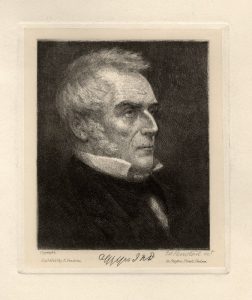
Portrait of John Nelson Darby
© National Portrait Gallery, London SourceJohn Nelson Darby by Edward Penstone etching and aquatint, late 19th century NPG D11119. Given by Edward Penstone, 1903. In National Portrait Gallery. Accessed September 28, 2017. Used with Permission. [CC BY-NC-ND 3.0]

Brother Lee says that “the move among the Brethren at the beginning was really marvelous. This was a golden time that was a great help to the church life. Many spiritual, seeking Christians agree that this may have been the beginning of the fulfillment of the prophecy in the Lord’s epistle to the church in Philadelphia in Revelation 3. However, due to the Brethren’s overemphasis on doctrines, they were divided again and again” (The History of the Church and the Local Churches, p. 35).

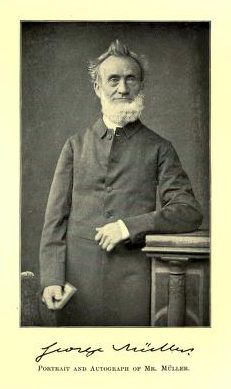
Many spiritual brothers were raised up by the Lord in this period, including Charles Stanley, George Cutting (who wrote about the assurance of salvation in Safety, Certainty, and Enjoyment), Robert Govett (who saw the matter of Christian reward), G. H. Pember, and D. M. Panton. George Müller, who learned lessons concerning prayer and faith in God’s word, was also raised up in England to live a life of faith.

Portrait of Robert Govett | SourceGovett. Before 1901. In Wikipedia CommonsJune 16, 2008. Accessed October 02, 2017. [Public Domain]

Portrait of George Müller | SourcePortait of George Müller. In George Müller of Bristol and his Witness to a Prayer-hearing God. By Arthur T. Pierson. 1899. Accessed on October 03, 2017 via Internet Archive Book Images. [NOT_IN_COPYRIGHT]

Brother Nee also points out in What Are We?,

At the same time another group of people were raised up who paid attention to the inner life…After the line of [Robert Pearsall] Smith, there was Mrs. Hannah Whitall Smith…There were also others like Stocknell (?), Evan Hopkins, and Andrew Murray. They continued the line of truth concerning self-denial preached by ones like Madame Guyon two hundred years earlier in the Catholic Church. These believers began to conduct conferences in Germany, England, and other places. These conferences were the beginning of what we know today as the Keswick Convention. The main speaker at these conventions was Evan Hopkins.

In addition to Hopkins, there was H. C. Trumbull who released the truth on the overcoming life at the Keswick Convention. These messages brought in a great recovery concerning the knowledge of the overcoming life and the way for believers to experience this overcoming life in their living.

[Jessie Penn-Lewis, a Welsh sister, was involved in the 1904-1905 Welsh revival, led by Evan Roberts, and] was one who truly bore the cross. Through her experiences, many believers were attracted to pursue the truth concerning the cross. Through these men and women, God led many to realize that the centrality of God’s work is the cross. (Collected Works of Watchman Nee, vol. 11, pp. 852-854)

Portrait of Robert Pearsall Smith
© National Portrait Gallery, LondonSourceRobert Pearsall Smith by Unknown photographer, albumen print on card, 1875. NPG Ax160485. 3 7/8 in. x 2 1/2 in. (97 mm x 62 mm) overall. Given by Barbara Strachey (Hultin, later Halpern), 1999. In National Portrait Gallery. Used with permission. [CC BY-NC-ND 3.0]

Portrait of Hannah Whitall Smith | SourceHannah Whitall Smith. Asbury Theological Seminary, B.L. Fisher Library Archives. In Wikimedia Commons. October 14, 2006. Accessed October 02, 2017. [Public Domain]

Portrait of Andrew Murray | SourceAndrew Murray. In Wikimedia Commons. December 12, 2009. Accessed October 02, 2017. [Public Domain]

Portrait of Henry Clay Trumbull | SourceHenry Clay Trumbull. 1905. The Library of Congress, Washington D.C. In Biographical sketches of distinguished officers of the army and navy. By Lewis Randolph Hamersly. New York: L.R. Hamersly, 1905. Accessed on October 01, 2017 via Internet Archive Book Images. [NOT_IN_COPYRIGHT]

Evan Roberts’ last revival meeting | SourceUnknown. Welsh Revival. July 04, 1905. In Wikimedia Commons. May 02, 2015. Accessed October 02, 2017. [Public Domain]

Posted on

Eighteenth Century Britain


Revival and Missionary Work

In this same period the Lord raised up the Wesley brothers, John (1703-1791) and Charles (1707-1788), in Britain. John Wesley was also very much influenced by the Moravian Brethren.

Portrait of John Wesley SourceDuval, P. S. Revd. John Wesley. 1788. Philadelphia. In History of all the religious denominations in the United States: containing authentic accounts of the rise and progress, faith and practice, localities and statistics, of the different persuasions. Harrisburg, PA, 1849. Bookplateleaf 0006. Accessed October 1, 2017 via Internet Archive Book Images [No known restrictions].

Brother Nee says in What Are We?,

At the beginning of the eighteenth century, a great revival broke out in England. In 1729 the two Wesley brothers were raised up by God. They were called the Methodists. Through them, God brought in a great tide of revival. This was the beginning of the Methodist Church. The Wesley brothers were the prime figures of the eighteenth century. (Collected Works of Watchman Nee, vol. 11, p. 849)

In his early years, John Wesley had been ordained a priest in the Church of England, but despite attempting to do many good works, he was still not saved. He first came in contact with the Moravian Brethren on his missionary journey to the American colonies and met with them in England after he returned from the colonies. He was touched by their living, and they shared with him about justification by faith. In 1738, as he was walking home after a meeting with the Moravian Brethren in London, he was saved. Three days before, his brother Charles had also been saved. From this point onward, the two brothers and their friend, George Whitefield, preached the gospel throughout all of England. They preached in the open air (which was against the practice of the Church of England) and brought many to salvation. They also recovered the matter of a holy living, of sanctification, and many people had a genuine turn and change in their behavior. Charles Wesley was also a prolific hymn writer. About their impact, Brother Lee says,

This was the time of the French Revolution. Those revolutionary ideas were gaining ground in England, and there was fear that the government itself might be overthrown. It was through the preaching of John Wesley and George Whitefield, those powerful open-air evangelists, that the gospel prevailed over the revolutionary tendencies and England was spared. British society was changed as a result of their work. (The World Situation and God’s Move, p. 15)

England was transformed by this revival, and it also brought in a strong desire among the British to preach the gospel around the world. The expansion of the British Empire in this period went along simultaneously with the raising up of many missionaries in Britain who went all over the earth to spread the gospel.

Missionaries in China SourceMissionaries in China. 1900. In Wikimedia Commons. Accessed September 27, 2017. [Public Domain]

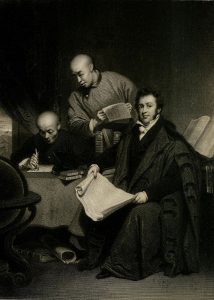
The first missionary society, the London Missionary Society, was formed in 1795, and they sent the first missionary, Robert Morrison, to China in 1807.

Painting of Robert Morrison, Chen Layoi, and Li Shigong at work | SourceJenkins, Morrison at Work. 1828. Engraving of a painting by George Chinnery. In Memoirs of the Life and Labours Robert Morrison, Vol. 1. London: Longman, Orme, Brown, Green, and Longmans by Eliza Morrison, 1839. Accessed October 01, 2017 via Wikimedia Commons. [Public Domain]

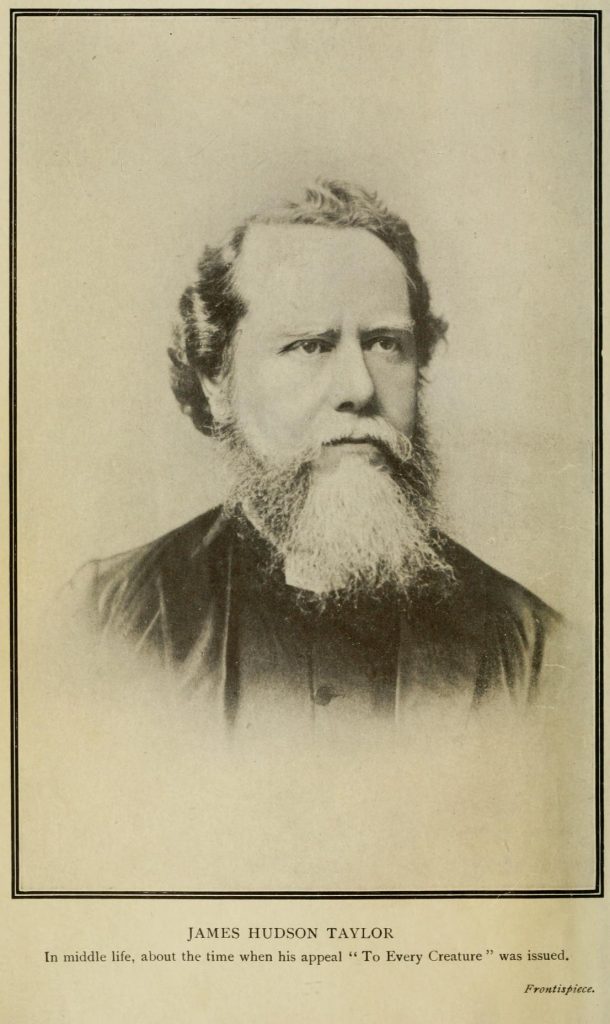
Other missionary societies—the Church Missionary Society, the Methodist Missionary Society, and many others, including Hudson Taylor’s China Inland Mission—were formed during this period.

Portrait of Hudson Taylor |  SourceHudson Taylor. In Hudson Taylor and the China Inland Mission: the growth of a work of God. By Howard Taylor. Princeton Theological Seminary Library. London and Philadelphia, 1918. Accessed on October 03, 2017 via Internet Archive Book Images. [NOT_IN_COPYRIGHT]

Posted on

The Moravian Brethren


The Recovery of the Initial Stage of the Church Life

The merging of these flows resulted in a move to recover the initial stage of the church life in the oneness of the Holy Spirit, which was evident among the Moravian Brethren in the 1700s. The origins of the Moravian Brethren, however, can be traced back to John Huss’s time. After the persecutions of the Catholic Church, the number of Protestants in what is the present-day Czech Republic declined, but a remnant remained and was dispersed across northern and central Europe. A small group of believers in Moravia, led by a brother called Christian David, boldly proclaimed the truth and caused a revival, but, as a result, they were persecuted by the Catholic Habsburg Empire and fled their homeland.

Portrait of Christian David (Kristián David) | SourceKristián David. 1900. In Wikimedia Commons. Accessed September 11, 2017. [Public Domain]

In 1722 they came as refugees to Count von Zinzendorf in Saxony, in the eastern part of Germany. Zinzendorf received them, and they began to build a community in a new village called Herrnhut. Various Christians escaping from persecution found their way there.

Portrait of Count von Zinzendorf | SourceBalthasar Denner. Nikolaus Ludwig von Zinzendorf.  In Die großen Deutschen im Bilde. By Michael Schönitzer. 1918.  Accessed on September 28, 2017 via Wikimedia Commons. [Public Domain]

After a period of discord because of their different backgrounds, Zinzendorf urged the believers to be one. They signed an agreement and met in oneness. When they partook of the Lord’s table together in an atmosphere of oneness, the Holy Spirit was poured out upon them, and they experienced a great revival. They set up continuous prayer for twenty-four hours a day, and they were the first Protestant group to begin overseas missionary work.

Brother Lee says the following about Zinzendorf and his group:

Two centuries after Luther, seeking Christians in northern Europe were under persecution and forced to leave their countries. Many went to Germany, where a brother named Zinzendorf, who genuinely loved the Lord, allowed them to settle on his large estate. These persecuted ones came to Zinzendorf’s estate with many differing opinions, and their dissension and fighting increased after their arrival. One day in 1727 Zinzendorf called them together and convinced them to drop their disputations and to hold only to the items of the common faith. That Lord’s Day, at the Lord’s table, they experienced an outpouring of the Holy Spirit, and there was a great revival. This began the first practice of the church life in the Lord’s recovery, but the light that these Moravian Brethren saw was not very clear. (The Recovery of Christ in the Present Evil Age, p. 37)

History shows us that there was a desire within many seeking ones for the proper church life. They could not express this inward desire, but actually there was something in them seeking or hunting the proper church life. In the eighteenth century the Lord moved among the Moravian brethren under the leadership of Count [von] Zinzendorf to recover something of the practice of the church life.

To our knowledge, since the time of the early apostles, the Moravian brothers might be considered as the first group of Christians to realize the church life in a somewhat proper way. Therefore, God’s blessing was poured out upon them. Although they enjoyed the practice of the church life to a certain degree, they were still not clear about many aspects of the truth concerning the church. (The History of the Church and the Local Churches, pp. 32-33)

Posted on

The Mystics


The Recovery
of the Experience of the Inner Life

During this period, the Lord also recovered the experience of the inner life with the mystics, who reacted against the deadness of the reformed church. Regarding this group, Brother Nee says in What are We?,

At the same time there was a new discovery within the Catholic Church. A group of spiritual people were raised up by the Lord. The most spiritual one among them was Miguel de Molinos, who was born in 1640 and died in 1697. He wrote a book called Spiritual Guide which taught men the way to deny themselves and die with the Lord. This book affected many people at that time. One of his contemporaries was Madame Guyon. She was born in 1648 and died in 1717. She was even more knowledgeable in the matters of the union with God’s will and the denial of the self. Her autobiography is a very good spiritual book.

In addition there was Father Fenelon who was a bishop at that time. He was very willing to suffer for the Lord, and he worked together with Madame Guyon. Through these men and women, God released many spiritual messages. At that time men and women with the deepest experience of spiritual life were found in the Catholic Church. Protestantism was only paying attention to the doctrine of justification by faith. (Collected Works of Watchman Nee, vol. 11, pp. 847-848)

Portrait of Madame Guyon | SourceMadame Guyon. Illustration in: Elbert Hubbard, Little Journeys to the Homes of the Great, Volume 13, Memorial Edition, New York, 1916. Urbana, Illinois: Project Gutenberg, Release date, November 12, 2007. Accessed September 11, 2017, from www.gutenberg.org/ebooks/23458. License: this eBook is for the use of anyone anywhere at no cost and with almost no restrictions whatsoever. You may copy it, give it away or re-use it under the terms of the Project Gutenberg License included with this eBook or online at www.gutenberg.org.

Portrait of Father Fenelon | SourceFather Fenelon. Illustration from: Elbert Hubbard, Little Journeys to the Homes of the Great, Volume 13, Memorial Edition, New York, 1916. Urbana, Illinois: Project Gutenberg, Release date, November 12, 2007. Accessed September 11, 2017, from www.gutenberg.org/ebooks/23458. License: this eBook is for the use of anyone anywhere at no cost and with almost no restrictions whatsoever. You may copy it, give it away or re-use it under the terms of the Project Gutenberg License included with this eBook or online at www.gutenberg.org.

Brother Nee also mentioned that around the same time, Gottfried Arnold (1666-1714), a Lutheran theologian in Germany, “wrote many books concerning questions of the church. He considered that the church at that time had deviated from the truth and that it must return to the proper ground as revealed in the New Testament before it could be built up” (Collected Works of Watchman Nee, vol. 11, p. 848).

Portrait of Gottfried Arnold | SourceBusch, Georg Paul. Kupferstich Gottfried Arnold (1666-1714) evangelischer Theologe. 1716. Munich. In Wikimeda Commons. May 9, 2006. Accessed September 11, 2017. [Public Domain]


Brother Nee saw that there were “two flows. One came from believers like Molinos, Madame Guyon, and Fenelon. The other flow came from men represented by Arnold…Through [Madame Guyon’s] writings, one can see that she was indeed a very spiritual person. Concerning Arnold, he recovered mostly the outward matters. He proposed that Christians return to the scriptural ground of the New Testament. These two flows eventually merged into one” (Collected Works of Watchman Nee, vol. 11, p. 848).

Posted on